


In our previous article The Most Important Conversations Are Often the Ones We Practice the Least, we discussed a paradox that is becoming increasingly visible across animal health: the most important conversations are often the ones we practice the least.
Yet when an organization wants to strengthen the communication skills of its teams, the first instinct is often to create more content: a new training program, a new framework, a new guide, a new presentation, or a new e-learning module. These resources are valuable. They help build knowledge, understand best practices, and provide structure.
However, when it comes to developing real communication skills, research shows that knowledge alone is not enough.
The question is therefore not only “What do we need to learn?” but also “How do we actually learn?”
Knowing Is Not the Same as Being Able to Do
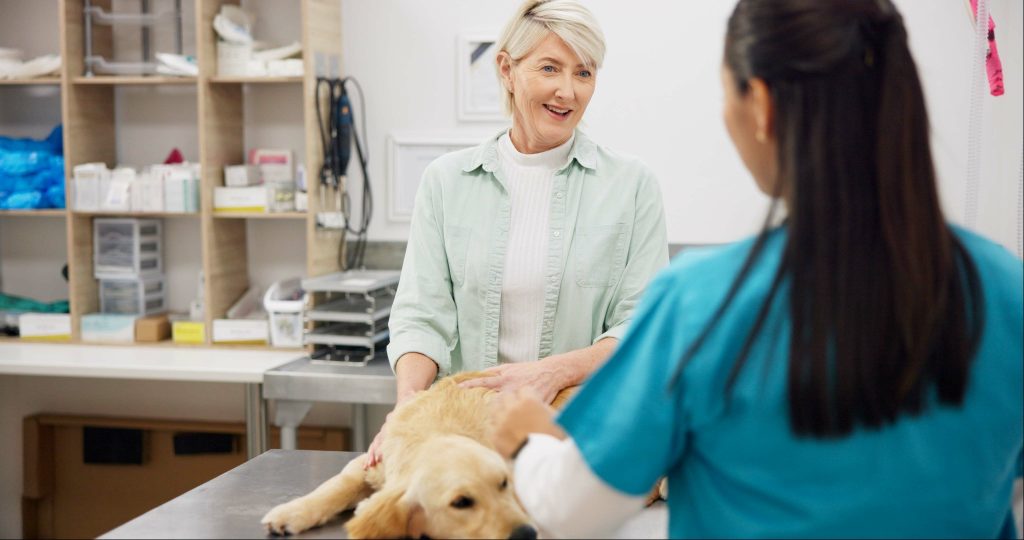
Imagine a young veterinarian faced with a pet owner who refuses a treatment for financial reasons.
That veterinarian probably understands the benefits of the treatment. They know what recommendations to make. They know which protocol to follow.
But does that mean they will be able to handle the conversation effectively? Not necessarily.
Just like in sports, music, or aviation, communication skills are largely performance-based. They require the simultaneous use of knowledge, behaviors, adaptability, listening skills, emotional management, and real-time decision-making.
This is precisely why many studies now distinguish between acquiring knowledge and developing competence. A person may intellectually understand an approach without being able to apply it confidently and effectively in a real-life situation.
What Research Tells Us: Communication Is Learned Through Practice(1)
When Andrew Blackmore and colleagues analyzed dozens of studies focused on communication within healthcare professions, they found that simulation-based approaches improved communication skills and that these improvements could be transferred beyond the training environment itself. In other words, the benefits were not limited to the simulation exercise alone.
Why? Because communication is a skill that is built through action and strengthened through memory retention. Like any complex professional skill, it requires people to practice, experiment, make mistakes, receive feedback, and try again.
In other words, communication skills develop less through exposure to content and more through repeated opportunities for real practice.
Repetition Accelerates Learning
In many organizations, the most difficult conversations are experienced as exceptional events.
They may occur once or twice, and then not happen again for several weeks or months. In the meantime, there are few opportunities to practice.
Yet simulation research shows that repetition plays a critical role in skill development.
The Rapid Cycle Deliberate Practice model described by Carly Ng and colleagues(2) is based precisely on this principle: learners rapidly alternate between practice, targeted feedback, and another attempt until the desired level of performance is reached. This approach has been associated with significant improvements in immediate learner performance.
The principle is simple: try, receive feedback, adjust, try again, then repeat multiple times.
This logic is fundamentally different from an approach where a learner receives information once and is only confronted with the real situation several weeks later.
Without Feedback, Practice Has Limited Value
Practice is necessary. But practicing alone is not enough. A person can repeat the same mistake multiple times without ever realizing it. This is why feedback is such a central component of learning.
Research on healthcare simulation consistently highlights the importance of debriefing, coaching, and feedback in consolidating skills.
Feedback helps learners:
- Identify what works
- Recognise areas for improvement
- Reinforce effective behaviors
- Accelerate progress
In communication contexts, feedback may focus on:
- The structure of the conversation
- Listening quality
- Management of objections
- Paraphrasing and reframing
- Consideration of emotions
- The ability to structure and adapt a message
It is this continuous cycle between action and feedback that enables the gradual development of competence.
Realistic Scenarios Bring Learning Closer to Reality
Another major lesson from the research concerns the importance of context.
Communication skills are not acquired in the abstract. They are developed in situations that resemble those encountered in real life.
Simulation-based approaches were specifically designed to reduce the gap between learning and reality.
According to the review by Chukwuka Elendu and colleagues(3), simulation provides a safe environment in which learners can develop both technical and non-technical skills while receiving immediate feedback, without any real impact on patients, clients, or teams.
One of the greatest strengths of simulation is that it allows people to practice before the situation actually occurs.
This is particularly valuable for conversations in animal health, such as:
- Delivering a poor prognosis
- Managing treatment refusal
- Responding to objections during a commercial discussion
- Conducting a feedback conversation
- Presenting a new solution to a customer
- Managing tension within a team
In each of these situations, practice allows professionals to be better prepared when the real conversation takes place.
Why Are Practice Opportunities Still Limited?
If practice is so important, why is it still relatively rare? The answer is simple: it requires time and resources.
The most effective approaches typically rely on trainers and facilitators, practice activities and role plays, actors playing the role of clients, debriefing sessions, significant logistical organisation bringing all these people together…
These resources are rarely available in unlimited quantities and represent a substantial investment when organizations want to deploy them at scale.
This is particularly true when training hundreds of students, teams spread across multiple locations, international organisations, diverse learner groups with different needs…
This helps explain why many organizations continue to favor content-based approaches, even when they know practice is more effective for developing certain competencies.
A Conclusion That Is Becoming Increasingly Difficult to Ignore
Research findings are converging around several key principles.
Communication skills develop through repetition, feedback, realistic scenarios, progressive practice and training.
In other words: reading improves knowledge, practicing improves competence.
And this is probably one of the major challenges facing animal-health organisations today.
We know communication matters. We know it is learned through practice. We know simulation, progressive training, and feedback work.
The real question therefore becomes “How can we provide more opportunities for more professionals to practice?”
This is the question that will likely shape the future of communication training in the years ahead.
References
- Andrew Blackmore & al. (2018). Simulation-Based Education to Improve Communication Skills: A Systematic Review.
- Carly Ng & al. (2021). Rapid Cycle Deliberate Practice in Healthcare Simulation: A Scoping Review.
- Chukwuka Elendu et al. (2024). The Impact of Simulation-Based Training in Medical Education: A Review.